

Are you suffering from writer’s block?
Writers don’t like admitting they get stuck, and as a professional writer, there isn’t time to wait for inspiration when deadlines have been set. Keeping up with a social media campaign, blog posts, reviews, press releases, website creation, or any other project I might find on my plate
Honestly, I get stuck a lot. The trick is not admitting it (whoops) and finding a way to power through. Some days, one trick will work better than another to get me back on track. For that reason, I have a variety of tricks and tools I can pull out when I find myself in need.
1.) Turn off your Inner Editor
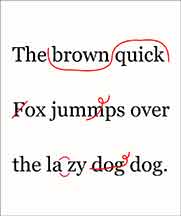
I admit to getting stuck trying to find the perfect words from time to time. We all do it. Everything must be just right. Your name is attached to it, after all, so it is representing you to all the world.
Well, yes, but only if you get it done.
Sometimes it’s best to stop worrying over how good or bad your writing is. If you’re constantly agonizing over finding the right phrase, the best wording, the perfect structure, you aren’t going anywhere. You may even be using this as an excuse to procrastinate.
Nobody is perfect, and no draft will be great. Many famous authors agree, including Arnold Samuelson, Bernard Malamud, and, of course, Ernest Hemingway. “The first draft of anything is sh#t,” said Hemingway. A blunt but correct observation.
Just type out anything. Anything at all. Right now. Get that first draft done. Once you have a completed project, you can start going in and editing. Until then, the little voice inside you that insists that isn’t right, that needs fixing, you should improve that needs to be pushed aside.
It doesn’t have to be good. It has to be done. You can clean it up afterward. You don’t polish a chair before you finish building it. You don’t edit until you have a completed draft. And voila, you broke through your writer’s block.
2.) Use Rewards

Whether a big treat or small rewards given after reaching certain milestones, I find dangling a carrot in front of myself works wonders for getting my writing done. Usually I aim for food-based items: A small treat like a chocolate or two; or something bigger, like an obnoxious barely-counts-as-a-coffee concoction from Starbucks or an ice cream.
Set a goal, either time or word count, and once you have reached it, indulge. It’s that simple.
For the sake of waistlines, this tool should be used in moderation. At least, if you’re using snacks as your reward.
3.) Walk Away

I’m not saying you should abandon your work. I’m suggesting you take a 20-minute walk, or a bath, or do something physical. Take yourself away from the keyboard and get moving. You’ll give yourself time to process the project without agonizing over it, and it’s healthy for you. Work out your stress, give yourself a break, and then come back to your writing fresh.
4.) Written? Kitten!
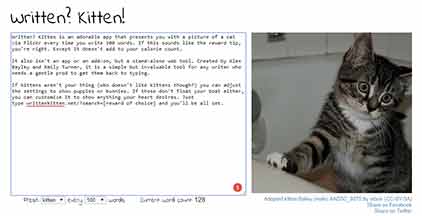
Written? Kitten is an adorable app that presents you with a picture of a cat via Flickr every time you write 100 words. If this sounds like the reward tip, you’re right. Except it doesn’t add to your calorie count.
It also isn’t an app or an add-on, but a stand-alone web tool. Created by Alex Bayley and Emily Turner, it is a simple but invaluable tool for any writer who needs a gentle prod to get them back to typing.
If kittens aren’t your thing (who doesn’t like kittens though?) you can adjust the settings to show puppies or bunnies. If those don’t float your boat either, you can customize it to show anything your heart desires. Just type writtenkitten.net/?search=[reward of choice] and you’ll be all set.
5.) Write or Die
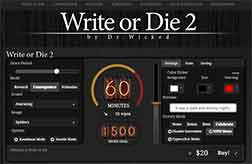
If Written? Kitten isn’t hardcore enough for you, give Write or Die a try. There is both an online option for free and an app available for purchase. Write or Die offers varying levels of punishment for not reaching your goals, from annoying sounds and lights to deleting the work one character at a time if you start to slack off.
While purchasing the application will give you many more functions, the online version offers a powerful motivator to get yourself writing as though your life depended upon it.
6.) Work on Something Else

You probably have more than one thing that needs to be done right now. If you’re stuck, it’s time to move on. Set aside the project that is blocking you and plow through the next thing on your agenda. Even if you aren’t a writer, I guarantee you have something else you need to write.
And once you do, you’ll have finished something. Now who has writer’s block? Not you.
7.) Brainstorm

Do you remember those writing exercises from when you were in school, where you’d have to turn in an outline before you were allowed to turn in an essay? Or creating a word web that ended up looking like a globular spider alien? Or just discussing ideas with other classmates before getting to work?
Those exercises can be useful in the real world. By creating a framework and gathering your thoughts, you’re setting yourself up for success. Much like having a road map, you know where you’re going and can get there with less of a struggle.
Sometimes they can even help you see things in a different light. That breakthrough moment can help push you past any kind of block. If it’s a big enough insight, you may find it hard to stop writing.
8.) 15 Minutes of Research

Maybe you aren’t quite sure how something works, or feel like some facts are eluding you. If only you had a bit more information, something more concrete, maybe then you would be able to create something wonderful.
If I’m in that situation, I use a technique I learned while doing National Novel Writing Month. Rather than fretting over getting an encyclopedic understanding of my subject, I indulge in fifteen minutes of research on the subject. Whether it is a web search or skimming through a book, I can gather any information on the subject I want.
Once that fifteen minutes is up, it is time to write. There are several reasons for this. First, obviously, is to get back to writing. Second, it prevents falling down a rabbit hole of interesting articles and procrastination. The ideas is to gather some facts to get the creative juices flowing again, not distract yourself from doing the writing.
You can go back into a more in-depth research session once you finish that draft. In the meantime, if there is anything that you didn’t find enough information on, you can put a placeholder there and move on with your piece. Once you get to the editing stage, you can replace [[QUOTE BY EXPERT ON SUBJECT]] with the actual line you were looking for.
9.) Make It A Game

Nothing motivates me more than the need to outdo someone else in a friendly competition. If you can, challenge someone to a “word sprint” or “word war.” Set a time limit and see who can write the most within that period of time. That’s all there is to it.
Don’t know anyone offhand who might want to play? Not to worry. Put out a call on social media, or search for your own. Hashtags like #wordsprint, #writingsprint, #wordgrab, and #wordscrim can help you find other writers to play against.
You can also check the SprintShack website for more resources and a community built by and for writers looking to participate in this kind of friendly competition. Check out their Celebrations Bundle, a collection of downloadable resources for writers.
10.) Block Out Distractions
Close that Facebook tab. Turn off the television. Put your phone into airplane mode. Turn on whatever music inspires you without distracting you, set a glass of water or tea next to you, and start writing. Stop allowing anything and everything to distract you.
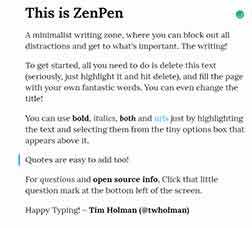
Having trouble? Try a tool like ZenPen. It’s an online tool that blocks out distractions and gives you a clean, quiet environment for writing. Other options include OmmWriter, ZenWriter, or FocusWriter. There are many tools like this out there, so find one that works for you and block out all those distractions when you really need to.
Do you have any techniques to help you break through writer’s block? Have you tried any of these and found they helped you out? I’d love to hear about it. Leave me a comment and tell me what you think!
 Siobhan G. Armstrong